What to Do Immediately After Your Phone Is Lost or Stolen

A missing phone creates two different problems at the same time. The first is physical: where is the device, and can it be recovered safely? The second is digital: what could another person see or change while the phone is out of your control? The digital problem may become more urgent than the value of the handset, especially when the phone holds email, saved passwords, banking apps, authentication codes, work data, or an active mobile number.
The right response depends on what happened. A phone left in a taxi is not the same as a phone taken from an unlocked hand. A device protected by a strong passcode is not the same as one whose passcode a thief watched you enter. Use the sequence below to protect access first, preserve a chance of recovery, and avoid making rushed choices that create a second loss.

The first decision: lost, stolen, or taken with the passcode?
Start with the most serious reasonable explanation. If the phone probably slipped under a car seat, you can ring and locate it while staying alert. If it disappeared during a distraction, was snatched, or is moving on a map, treat it as stolen. Do not travel to an unfamiliar location or confront anyone to retrieve it. Give location information to local law enforcement if you report the theft.
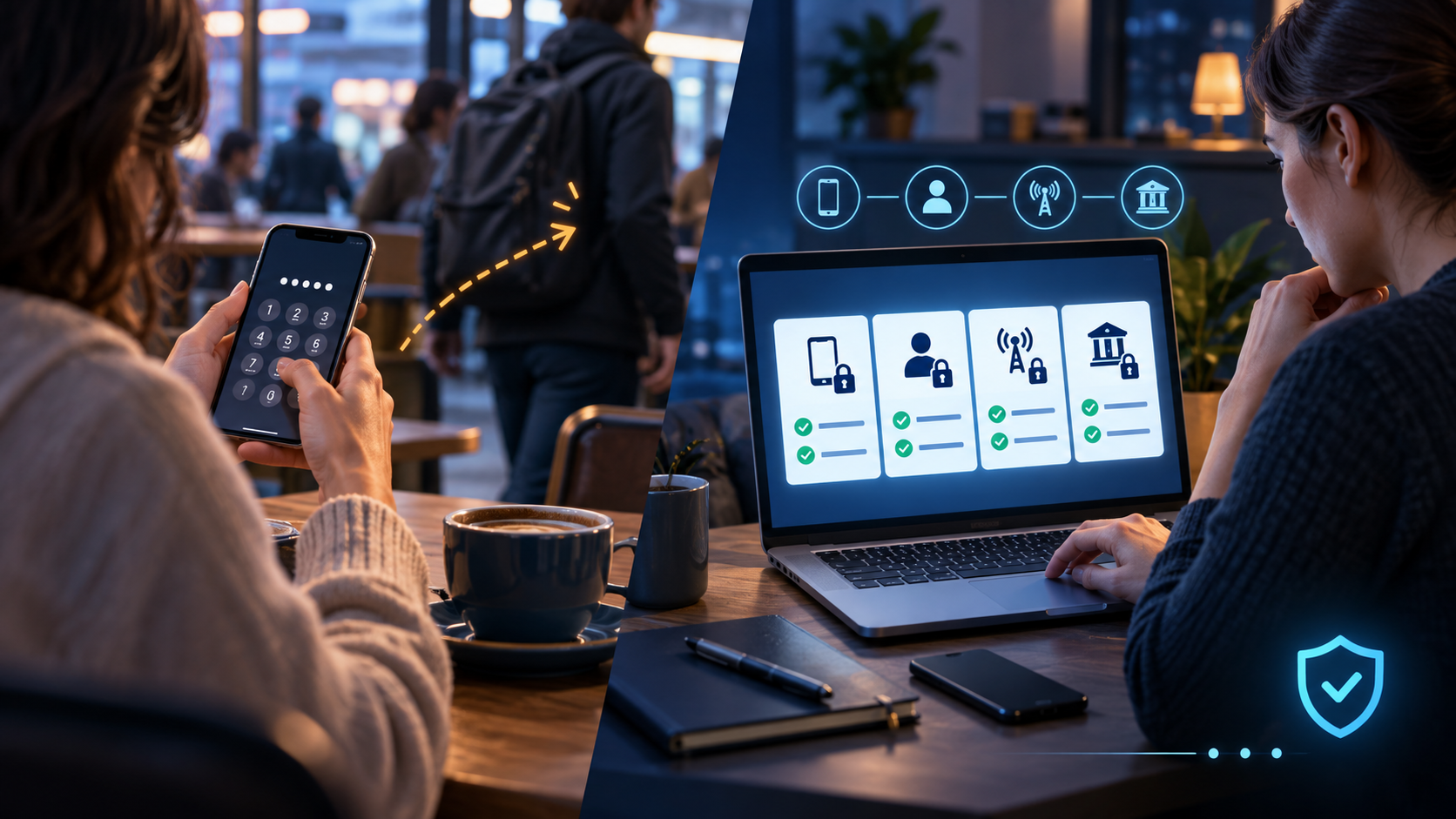
If someone may know the screen passcode, treat the event as both device theft and possible account compromise. A person with the phone and its passcode may be able to read messages, access an email inbox, reset some account passwords, view saved credentials, or interfere with device-recovery settings. In that situation, the order of operations matters: lock the phone quickly, then protect the accounts that can unlock everything else.
Your first 10 minutes: a short emergency sequence
- Move to a safe place and borrow a trusted device. Use your own computer, a family member’s phone in private browsing, or another device you trust. Avoid signing into sensitive accounts on a public computer if a safer option is available.
- Call your number once if simple loss is plausible. A nearby finder may answer. Do not disclose your home address, account passwords, verification codes, or device passcode to anyone who responds.
- Use the platform’s official finding service. For Android, use Google Find Hub through the official app or android.com/find. For Apple devices, use Find My or iCloud.com/find. Type the address yourself instead of following a link sent by a stranger.
- Mark the device lost or secure it. This is more useful than repeatedly refreshing the map. A lock-screen message can provide a safe callback number, ideally one that is not the missing phone’s number.
- Capture useful details. Save screenshots of the last known location, time, battery status, device name, and any suspicious movement. Record the serial number or IMEI if available through your account, receipt, packaging, or carrier.
- Contact the mobile carrier. Ask it to suspend the SIM or eSIM so calls and text messages cannot be received on the missing device. Ask what it needs to block the handset by IMEI and how replacement service will affect device tracking.
These steps can overlap. One trusted person can contact the carrier while you use the finding service. What matters is that nobody spends an hour following a location dot while the mobile number and important accounts remain exposed.
How to use remote finding tools safely
A map location is an estimate, not proof that a particular person has the phone. Indoor positioning, delayed updates, nearby buildings, and network conditions can make the pin imprecise. Use Play Sound when the device may be nearby. Use Lost Mode or the Android securing option when it is not in your possession. If the device is offline, a requested action may remain pending until it reconnects.
For an iPhone or iPad, Apple says you can sign in at iCloud.com/find without entering a verification code, which is important when the stolen phone was your trusted device. Marking it lost locks it with its passcode; Apple also suspends payment cards and passes used with Apple Pay. Do not remove a stolen Apple device from your Apple Account simply because someone contacts you and says removal is necessary. Removing it can remove Activation Lock and make the device easier for a thief to reuse or sell.
For Android, Google Find Hub can display a current or last known location, play a sound, secure a device, and provide information such as the IMEI on supported phones. The exact labels and available actions vary by device maker and Android version. Sign in only through an address or app you reached independently.
Lock first or erase immediately?
Remote erasure is powerful, but it is not automatically the first action in every case. Locking preserves the possibility that location information or a finder’s contact can help recover the device. Erasing is more appropriate when recovery is unlikely and the risk to the data is high. The balance changes sharply if the phone was unlocked when taken, the passcode was observed, sensitive work or health information is stored locally, or remote-lock status cannot be confirmed.
Before choosing erase, read the current instructions shown by your device platform. Erasure can affect what you can locate afterward, and the behavior differs by platform, version, and device state. If the phone is covered by theft-and-loss insurance, check the claim instructions before removing it from your account. Apple specifically tells customers with theft-and-loss coverage not to remove the device until the claim is approved.
If a workplace manages the phone, contact its IT or security team before erasing it yourself. The organization may have a mobile-device management process that can lock or wipe work data, preserve logs, and meet reporting obligations.
Call the carrier and protect the phone number
Your phone number can be a route into other accounts. Text-message codes, password-reset calls, and customer-service checks may all rely on it. Tell the carrier the device is missing and ask to suspend the line or move service to a replacement SIM or eSIM. Request an account PIN or port-out lock if those protections are available. Confirm that no unauthorized SIM change, call forwarding rule, or account-contact change has occurred.
Blocking the handset and suspending the line are different actions. An IMEI block is intended to prevent the physical phone from using participating mobile networks; suspending the SIM protects the service attached to your number. Ask the carrier what each action does in your country and whether it changes your ability to locate the device.
Secure accounts in the order that controls recovery
Changing every password randomly can waste the time when one account controls the rest. Work from the top of the recovery chain.
- Primary email. Email often receives password-reset links and security alerts. Change its password from a trusted device, review recovery phone numbers and addresses, inspect recent sign-ins, and sign out unknown sessions.
- Password manager. If the vault could be opened on the missing phone, change the master password and follow the provider’s lost-device instructions. Review trusted devices and session controls.
- Apple or Google account. Review devices, security events, recovery details, and unfamiliar sessions. Do not accidentally remove a device in a way that disables theft protection before understanding the consequence.
- Mobile-carrier account. Set a strong account PIN and verify that the attacker has not changed the SIM, forwarding, or authorized users.
- Financial and payment accounts. Lock or report exposed cards, review recent transactions, and call the number on the back of a card or use the institution’s official app. Do not call a number from an unexpected “device found” text.
- Messaging and social accounts. End sessions you do not recognize. Warn close contacts if an attacker may be able to impersonate you.
- Work and school accounts. Notify the responsible support or security team. It can revoke sessions and protect organizational data.
A password change is not always the same as ending every active session. Look for a device or session page and revoke unknown access explicitly. Also check whether new passkeys, authentication apps, forwarding rules, recovery addresses, or connected applications were added.
If the thief saw your passcode
A known passcode changes the threat model. Do not assume biometric security alone will protect the accounts after the phone leaves your hand. Mark the device lost immediately, protect primary email and cloud accounts, and tell banks and the carrier that the device and its unlock code may both be compromised.
Review actions taken around the time of theft: password-reset notices, new-device alerts, changes to recovery information, money transfers, and messages sent from your accounts. Preserve those alerts rather than deleting them. If you use an iPhone and had Stolen Device Protection enabled before the theft, some sensitive changes may require biometric authentication and may be subject to a security delay away from familiar locations. That feature helps, but it is not a substitute for responding quickly.
Protect money without following another scam
Use the official banking app on a trusted device or call a verified number. Report any cards that were physically stored with the phone and consider whether card details, payment apps, or financial email were accessible. Ask the institution to explain whether it recommends locking a card temporarily or replacing it. Continue checking transactions after the first day because unauthorized activity may not appear immediately.
Be suspicious of messages claiming that the phone has been found. Thieves sometimes send a link to a fake Apple, Google, carrier, or location page in an attempt to steal the account password and remove theft protections. A real-looking map, a reference to the correct device model, or a threat to erase your data does not make the message genuine. Open the official finding service yourself.
Report the loss and preserve evidence
For a theft, make a police report when appropriate in your location. Provide the model, color, serial number, IMEI, approximate time and place, screenshots of location data, and a factual description. Do not exaggerate what the map proves. Keep the report number for the carrier, insurer, employer, or payment provider.
If the event leads to account takeover, fraudulent purchases, or identity misuse, document each incident separately. Save confirmation emails, transaction identifiers, support case numbers, and a simple timeline of the actions you took. In the United States, IdentityTheft.gov provides a recovery-plan process for identity theft; other countries have their own national reporting services.
If the phone comes back
Recovery of the hardware does not automatically end the incident. Before returning to normal use, check whether the SIM was changed, whether the device was unlocked, and whether new apps, profiles, accessibility services, device administrators, or account sessions appeared. Install operating-system updates and review the security logs of important accounts.
If the device was out of your control while unlocked, or there is evidence that someone changed settings, consider backing up irreplaceable personal data and performing a factory reset according to the manufacturer’s instructions. Restore carefully and change compromised credentials from a different trusted device. A repair shop or security professional may be appropriate when the device contains regulated or high-value work data.
Prepare now so the next response is faster
- Use a strong device passcode that is not reused elsewhere, and prefer a longer alphanumeric code where practical.
- Turn on the official device-finding service and learn how to reach it from another device.
- Enable automatic backups and confirm that recent data can be restored.
- Use authentication methods that do not depend only on the missing phone. Store recovery codes securely offline.
- Enable a carrier account PIN or port-out protection if available.
- Write down the device serial number and IMEI in a secure place.
- Reduce sensitive notification previews on the lock screen.
- Know the contact route for your bank, employer, and mobile carrier.
A practical final rule
Think in layers: protect yourself physically, lock the device, protect the phone number, secure the accounts that control recovery, then handle money, reporting, and replacement. Do not let the hope of recovering the handset delay protection of the identity and access stored inside it.
The precise menu names will change as Android, iOS, carrier systems, and account settings evolve. Use this article as a response sequence, then follow the current instructions inside the official service for your device.
Use the response guide that matches the risk
If anyone may have seen or forced you to reveal the device code, use the stricter steps in the stolen-phone passcode response guide. If the immediate concern is ongoing visibility rather than possession of the phone, check whether an account or app is still sharing your location.
Sources and further reading
- Google Account Help: Find, secure, or erase a lost Android device
- Google Account Help: Lock or erase your lost phone or computer
- Apple Support: If your iPhone or iPad was stolen
- Apple Support: How to find your lost iPhone or iPad
- FTC Consumer Advice: Protecting personal information on your phone
- FTC Consumer Advice: Identity-theft recovery help

